From Systems
to Autonomy.
Research to and from Real-World Robotics
Engineering &
Team Leadership
FSAE President & Simulations Lead
University of Illinois Urbana-Champaign
BS Mechanical Engineering, Highest Honors
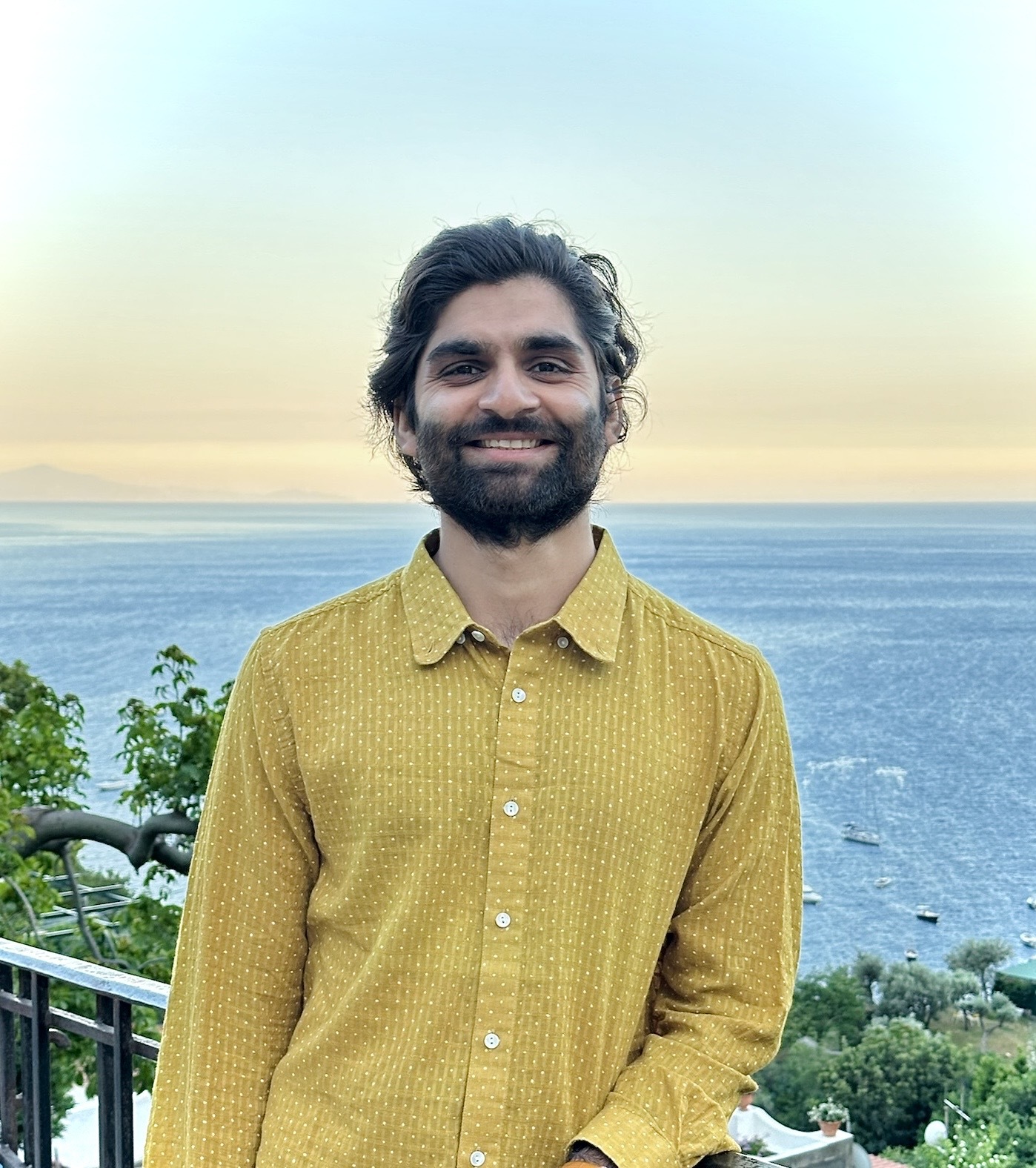
Robotics Scientist and Engineer
I have built race cars, developed algorithms for mobile manipulators that clean hotel bathrooms at Peanut Robotics, and recently joined a PhD program at UC Berkeley to explore the integration of Model Predictive Control and Reinforcement Learning for aerial transportation systems.
People often ask me, “What made you pursue a PhD after developing planning and controls software for a robotics company for 4 years?” My intellectual curiosity bucket simply wasn’t satisfied. I found myself craving the fulfillment I felt when I dove deep into a specific topic simply because it intrigued me. I wanted to immerse myself in a specific niche and spend the next few years filling up my curiosity bucket. That’s what led me to pursue a PhD.
When faced with a decision with equally appealing options, such as starting a PhD program or continuing in the industry, I ask myself, “In 10 years, which choice will I regret not taking?” I knew for a fact that I’d regret not pursuing a doctorate.
What Do I Bring to the Table?
\(S = f_{\theta}(E, R, c)\)
I have developed a context-dependent (\(c\)) skillset (\(S\)) that sets me apart from the average roboticist and researcher. My research capabilities (\(R\)) enable me to dive deep into algorithm details, critically question the validity of proposed methods and persistently solve hard problems. Meanwhile, my engineering expertise (\(E\)) allows me to intuitively understand real-world requirements and limitations, foresee failures, and systematically account for these considerations during system development.
In the controlled environment of an R&D lab or startup, a robot success rate of 90% may suffice. To enable robots to operate in the messy, unpredictable real world, we need 99.99%. I’ve optimized \(\theta\) so that I can seamlessly transition to play the role of a research scientist, a robotics engineer and everything in between. I aspire to lead teams to close the remaining 9.99% gap and drive integration of reliable robots into our everyday lives.
What is my research about?
My research focuses on developing intelligent robots capable of operating autonomously in complex, unstructured environments. I’m interested in leveraging vision-language models and reinforcement learning to enable heterogeneous teams of robots to collaboratively transport objects. All of my papers include real-world experiments, because what good is robotics if it doesn’t work in the wild?
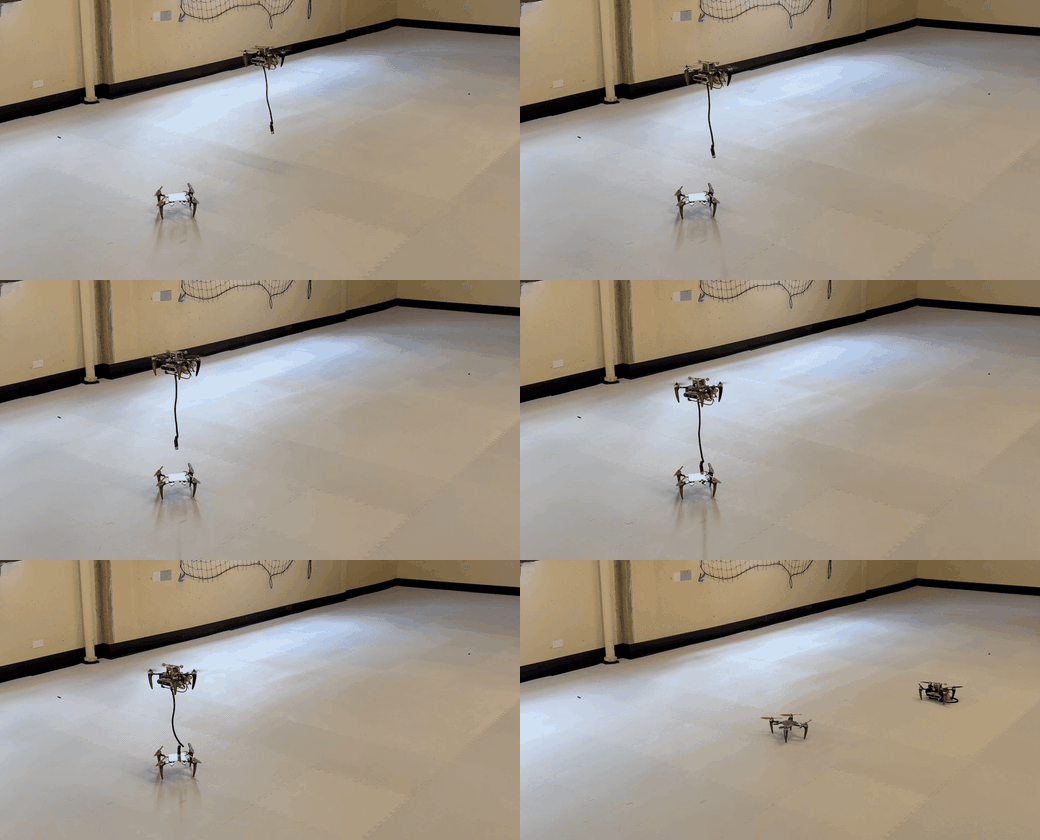
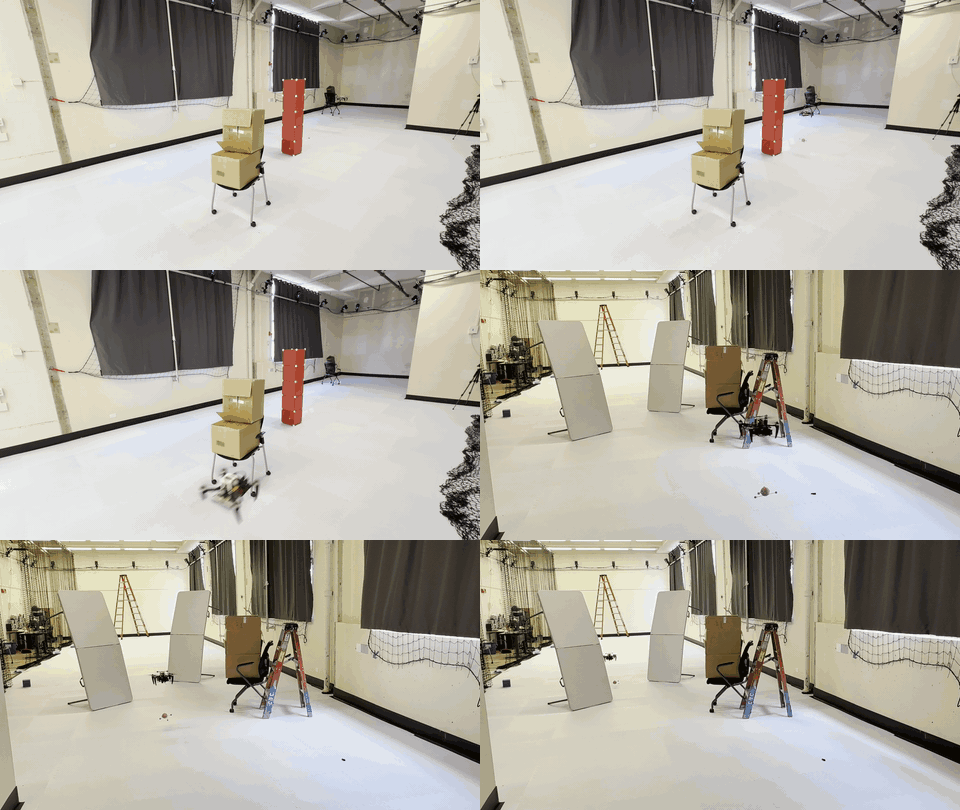
SPARTAN
Scalable Data Generation for Vision-Based Navigation of Aerial Robots with Suspended Payloads
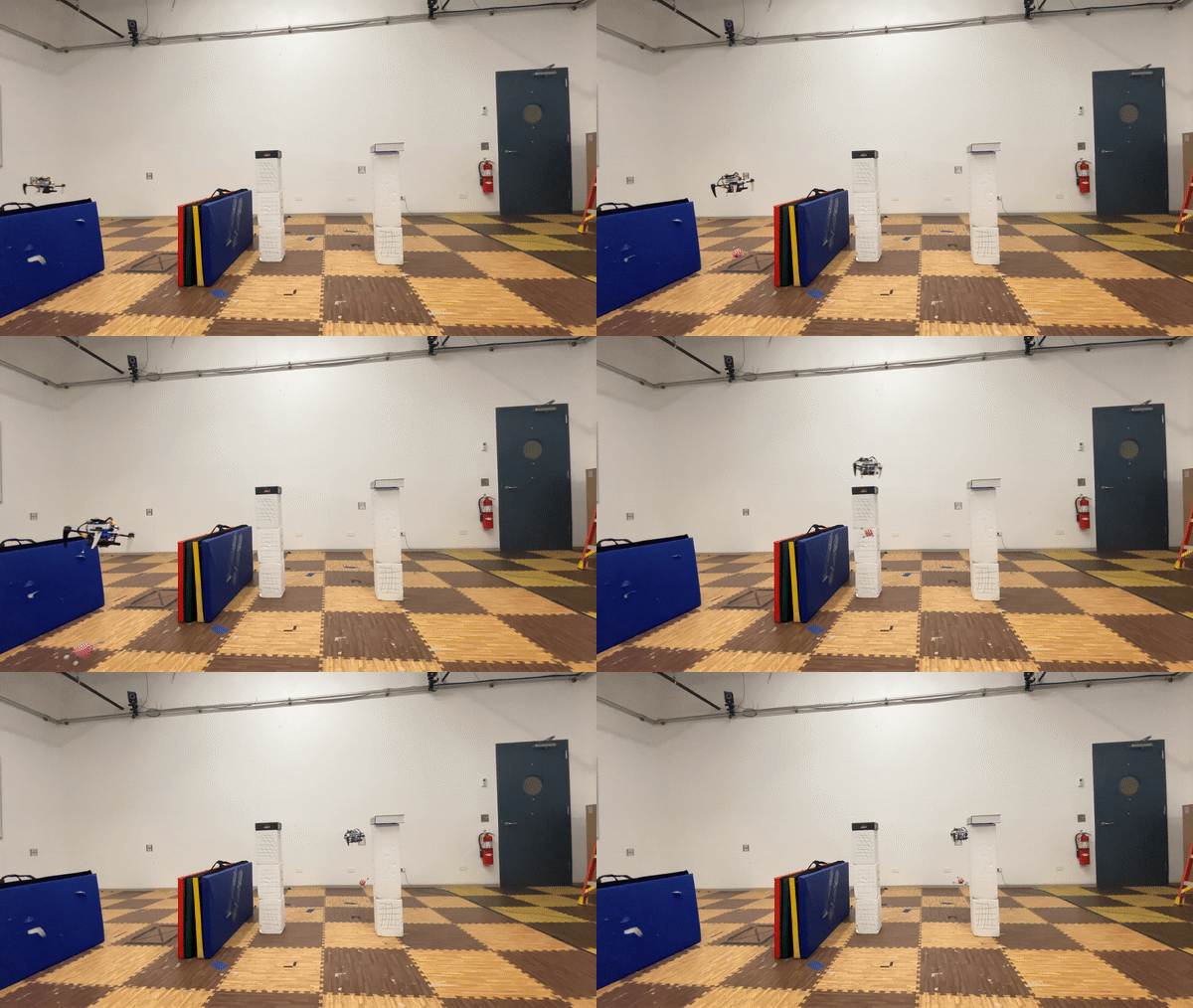
PolyFly
Polytopic Optimal Planning for Collision-Free Cable-Suspended Aerial Payload Transportation (RA-L 2025)
- PolyFly has been accepted to IEEE RA-L
- I’ve moved to UC Berkeley’s EECS department!
- I received the 2025 ECE Dr. Li Annual ECE Publication Award at NYU
- ES-HPC-MPC, my follow-up work on HPA-MPC has been accepted to IEEE RA-L
- My first research paper has been accepted to RA-L!
- Awarded the Ernst Weber Fellowship from the ECE department at NYU
- Awarded the SoE PhD fellowship from the ECE department at NYU